Overview
Every chart is re-ranked in the same weekly cycle the scores are collected in, so rank and movement always describe the same week of AI answers. The chart ranks every brand AI recommends — there is no artificial cutoff like a Top 10 or Top 100. If a brand isn’t on the chart, AI hasn’t recommended it as a solution in this category’s context yet.How Rank and movement are determined
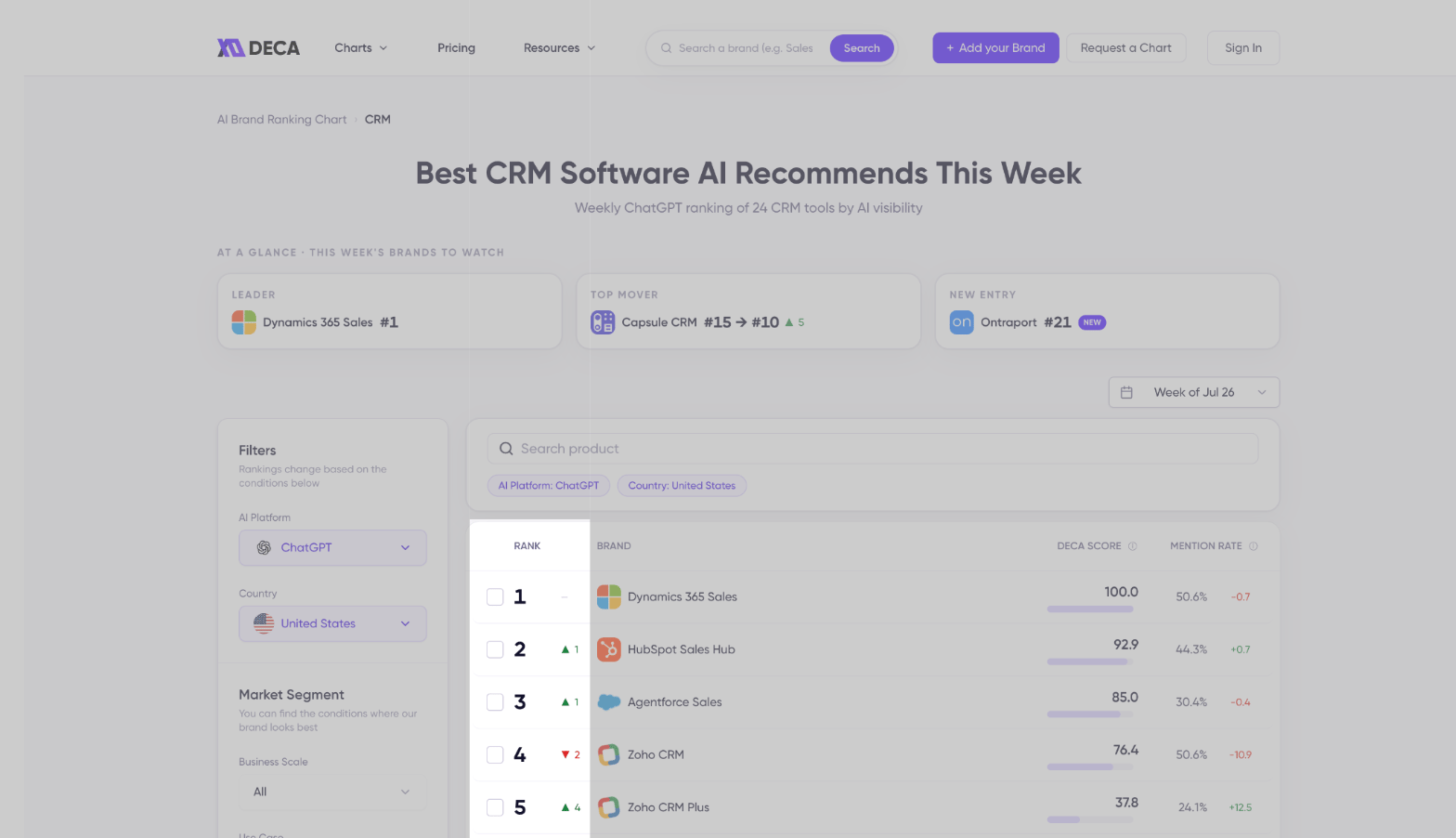
Rank and weekly movement on a category chart
How to read the movement signals
Every category chart opens with three signals for the week:
A one-week jump is a data point; a multi-week climb is a trend. Check Chart History before treating a spike as momentum.
Why Rank & weekly movement matter
Rank is the shortlist, made visible
When AI answers a category question, it names a handful of brands in order. Rank aggregates those orders across hundreds of answers — the closest thing there is to the shortlist AI puts in front of buyers.Movement separates news from noise
Because Top Mover status requires gains of a product’s own, movement flags what actually changed in AI’s behavior this week — not just reshuffling caused by someone else’s drop.It’s the scoreboard for your GEO work
Scores explain the why; rank is the outcome. After you ship changes, the following weeks’ movement is the simplest read on whether the category order shifted in your favor.Related metrics
DECA Score
The 0–100 score that determines rank order.
Mention Rate
How often you’re recommended at all, regardless of position.
Segment Position
Your rank inside a specific buyer segment, not just the overall chart.